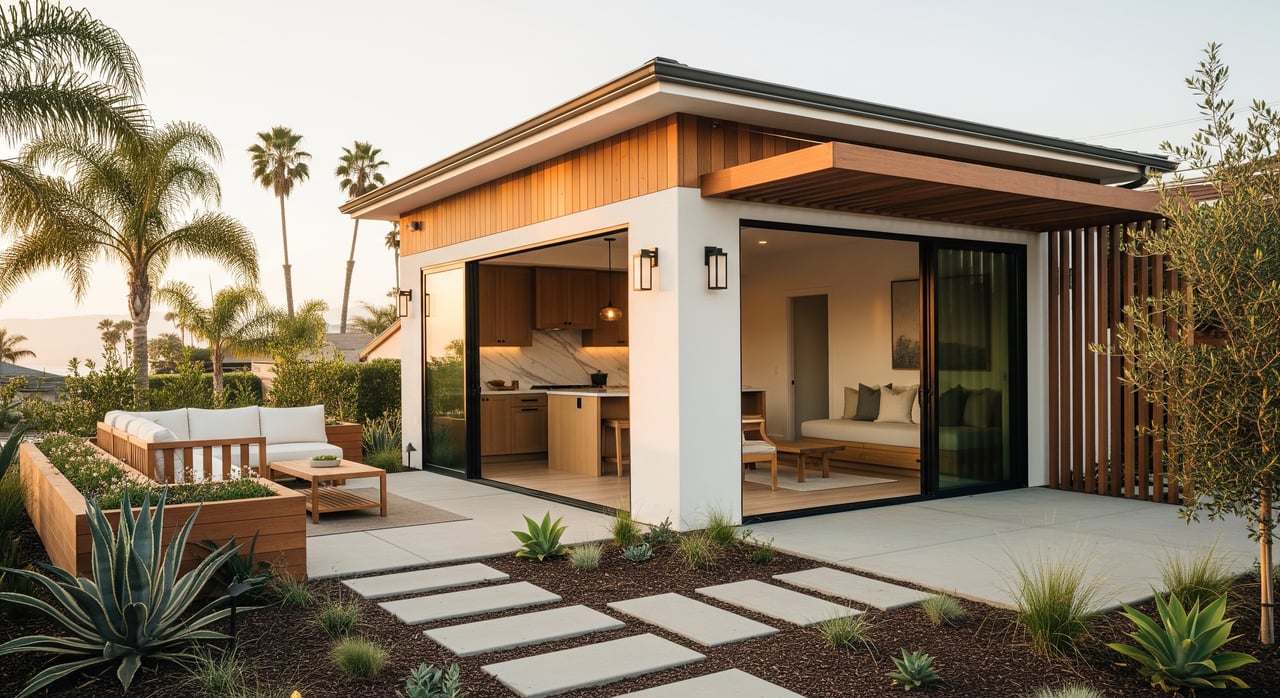
Thinking about adding an accessory dwelling unit to your Encinitas property? An ADU can create flexible space for family, generate rental income, or set up a future-proof plan for your home. But coastal rules, zoning overlays, and utilities make the path feel complicated. This guide breaks down ADU basics, Encinitas-specific factors, permitting steps, and practical tips so you can move forward with confidence. Let’s dive in.
What an ADU Is
An accessory dwelling unit is a secondary home on the same lot as a primary residence. Common types include:
- Detached ADU: A separate structure, often in the backyard.
- Attached ADU: Added to or within the main home with its own entrance.
- Junior ADU (JADU): A smaller unit created within the existing single-family home, often with some shared facilities.
- Conversion ADU: Built by converting existing space like a garage, attic, basement, or part of a multifamily building.
State Rules You Should Know
California laws shape how cities like Encinitas handle ADUs. Key statewide provisions include:
- Ministerial approval: If your ADU meets objective standards, the City must approve it ministerially without discretionary design review.
- Owner-occupancy: Cities generally cannot require owner-occupancy for new ADUs. JADUs often still require an owner-occupant.
- Unit counts: State law typically allows at least one ADU and one JADU on single-family lots, with additional opportunities for conversions on some multifamily sites. Local implementation varies.
- Parking: Parking requirements are limited under state law. For example, replacement parking is not required if you convert a garage to an ADU, and many locations near transit qualify for reduced parking. Local specifics still apply.
- Size, setbacks, and height: State law sets guardrails so ADUs are not unduly restricted. Many jurisdictions use standards like JADUs up to 500 square feet and modest side and rear setbacks such as 4 feet, but Encinitas sets its own objective standards within state limits.
Encinitas Local Context
Encinitas has multiple zoning districts and coastal overlays that affect ADU feasibility. Parcel-level review is essential.
Zoning basics
- Single-family and multifamily zones have different allowances and development standards. Your lot’s zoning determines baseline rules for setbacks, lot coverage, and height.
- Start by confirming your parcel’s zoning designation and any applicable plan-area rules.
Coastal Zone factors
- Much of Encinitas is in the California Coastal Zone. The City’s Local Coastal Program implements the Coastal Act locally.
- Some ADUs in the coastal zone require a Coastal Development Permit or a finding that the project conforms to the Local Coastal Program. Coastal Act consistency includes attention to public access, views, shoreline protection, and bluff hazards.
- Properties near bluffs, the bluff toe, public beaches, or coastal accessways often face special constraints and professional study requirements.
Overlays and hazards
- Scenic or visual resource areas and historic overlays can introduce design considerations.
- Floodplain, sea-level rise, and bluff hazard zones may limit size and placement or require engineering and hazard analyses.
- Some neighborhoods have specific plan rules that influence architecture or site design.
Utilities: sewer or septic
- Whether your property is on sewer or septic is a major feasibility driver. Septic capacity can limit an ADU unless the system is upgraded or you connect to sewer.
- Water, sewer, and stormwater connection capacity and any required upgrades can affect budget and timeline.
Parking and beach areas
- Encinitas applies state parking limits but also considers driveway access and coastal public access needs. On-street parking near beaches is a practical concern. Confirm how local rules apply to your site.
Renting an ADU
ADUs are commonly used for long-term rentals. Short-term rental use is regulated locally and may be limited by the City, the Coastal Act, or by HOA rules. Always verify the current short-term rental ordinance and any applicable covenants.
How Many ADUs You Can Build
State law generally allows at least one ADU and one JADU on single-family lots, and it provides paths for multiple conversion ADUs in some multifamily situations. The Encinitas municipal code sets the final allowances for your zoning and parcel. Confirm details with the City before you design.
Permitting Steps
If your proposal meets objective standards, you can usually follow a ministerial path.
Ministerial path
- Pre-application check: Confirm zoning, Coastal Zone status, and any overlays or hazards with planning staff.
- Plan submittal: Provide a site plan, floor plans, elevations, drainage notes, and utility information.
- Building permit plan check: The City reviews structural, mechanical, plumbing, energy compliance, fire, and applicable accessibility items.
- Inspections and final: The City inspects construction and issues final occupancy when complete.
When extra permits apply
- Coastal Development Permit: Required for some projects in the Coastal Zone, especially near bluffs or where public access or shoreline issues arise.
- Variance: Needed if you request deviations from objective standards.
- Design or historic review: Can apply where a historic resource or specific overlay requires it. State law limits discretionary review, but protected resources may still trigger it.
- Multifamily conversions: Changing use within a multifamily building can require specific approvals.
Other agency reviews
- Engineering and stormwater: Drainage and grading checks are common.
- County environmental health or sewer agency: Septic approvals or sewer connection requirements.
- Fire department: Access, hydrant location, egress, and any required fire-safety features.
- Coastal Commission: May become involved if an LCP decision is appealed or a project raises Coastal Act issues.
Timelines and Costs
- Ministerial ADUs: Plan-check and building-permit timelines are typically measured in weeks to a few months for straightforward projects.
- Discretionary or coastal permits: Expect additional months for coastal review or variances.
- Fees: Plan for planning, building, engineering, and utility fees. Budget for potential sewer connection costs or septic upgrades, stormwater or soils reports, and any coastal or hazard studies.
Smart Planning Tips
Use this quick checklist to scope your Encinitas ADU before you design:
- Confirm zoning and overlays: Verify base zoning plus Coastal Zone status, scenic or historic overlays, and any floodplain or bluff hazards.
- Verify sewer or septic: Request a sewer availability letter or a septic capacity review early.
- Ask about a CDP: Confirm whether your site and project type require a Coastal Development Permit or LCP conformity check.
- Review parking rules: Understand driveway access, parking removal, and any beach-area on-street constraints.
- Check rental and HOA rules: Review short-term rental regulations and any CC&Rs that may apply.
- Schedule a pre-application chat: A planning counter conversation can clarify standards, timelines, and required studies.
- Line up the right team: Depending on site conditions, you may need an architect or designer, civil engineer, soils or geotechnical expert, septic professional, and a contractor with local ADU experience.
ADUs and Resale
An ADU can add flexibility that many buyers value, whether for multigenerational living or long-term rental income. In coastal neighborhoods, ensuring Coastal Act consistency and quality workmanship can help the unit feel like a true extension of the property. If you are considering selling in the next few years, it can be helpful to discuss how an ADU might influence your pricing, buyer pool, and timeline.
Let’s Talk About Your Property
Every Encinitas lot is unique, especially in the Coastal Zone. If you want a clear read on how an ADU could fit your goals or how to position your home in today’s market, reach out to Miki Edwards. Request a Free Home Valuation and get a local, data-informed plan tailored to you.
FAQs
What are the main ADU types in California?
- Detached, attached, junior ADUs within a single-family home, and conversion ADUs created from existing spaces like garages or attics.
Do I need to live on the property if I build an ADU in Encinitas?
- State law generally prohibits cities from requiring owner-occupancy for new ADUs, while JADUs often still require an owner-occupant.
Do ADUs near the beach need parking in Encinitas?
- State law limits parking requirements, but local rules consider driveway access and coastal public access; confirm site-specific parking needs with the City.
Will I need a Coastal Development Permit for an ADU in Encinitas?
- Many sites in Encinitas are in the Coastal Zone; some ADUs require a CDP or proof of Local Coastal Program consistency, especially near bluffs or public accessways.
Can I rent my ADU short term in Encinitas?
- Long-term rentals are common, but short-term rental use is locally regulated and may be restricted by City rules, Coastal policies, or HOA covenants.
How long does a ministerial ADU permit take in Encinitas?
- Straightforward ministerial projects typically move through plan check and building permits in weeks to a few months; coastal or discretionary reviews add time.
Will a septic system support an ADU on my lot?
- Septic capacity can limit an ADU; you may need system upgrades or a sewer connection if available, subject to agency approvals.