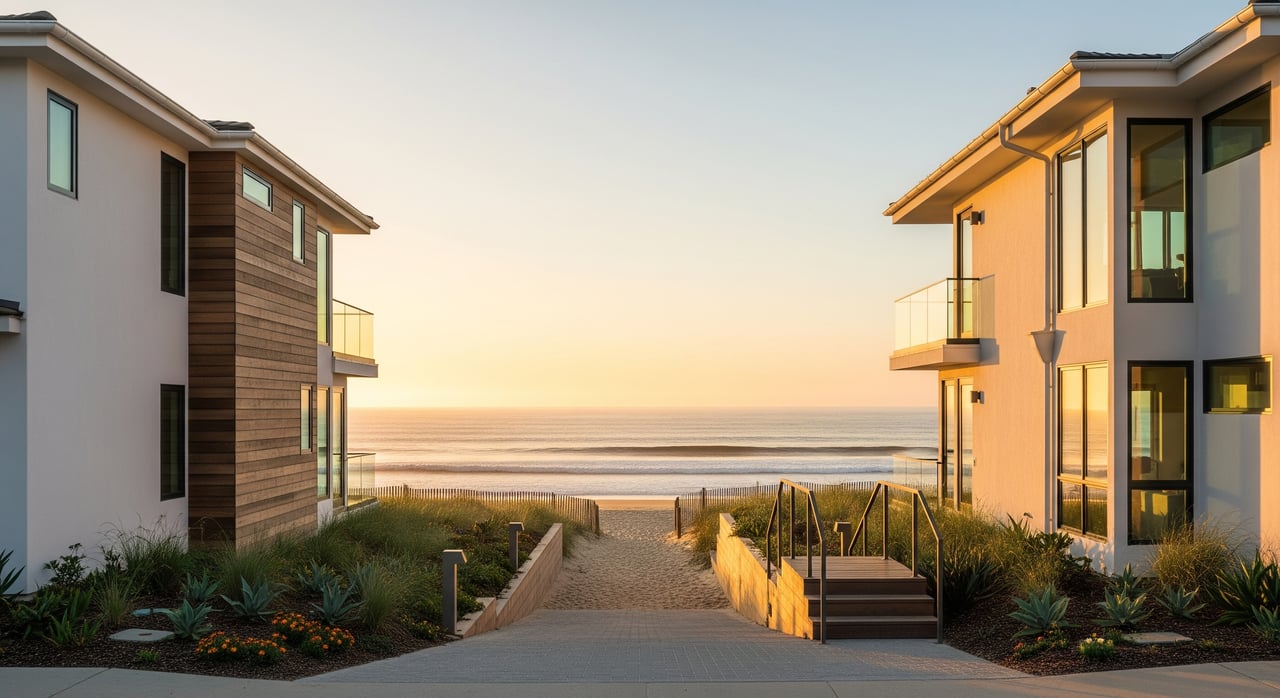
Dreaming of stepping out your door and onto the sand in Oceanside? You’re not alone. If you want an everyday beach routine with bikes, surfboards, and sunset walks, choosing the right neighborhood matters more than you think. In this guide, you’ll learn how three Oceanside areas stack up for beach access, bike paths, and walkable amenities so you can find your best fit. Let’s dive in.
What easy beach access means in Oceanside
When you picture “easy beach access,” think in minutes. Many Oceanside homes are a 1 to 10 minute walk to the sand, and some sit directly on the oceanfront. Other pockets are a quick bike ride from the paved oceanfront path. Your ideal match depends on how you balance three things: immediate sand access, walkable dining and transit, and overall budget and home type.
You’ll see three main clusters stand out for beach-focused living:
- The Strand and Downtown: closest to the sand, strongest nightlife and retail mix, and walk-to-rail convenience.
- Harbor Beach and Harbor District: calmer water, boating, and a marina setting with waterfront paths.
- South Oceanside: more residential streets, broader home choices, and often better value per square foot.
The Strand and Downtown: walk-to-surf living
The Strand and the blocks around the Pier and Mission Avenue deliver Oceanside’s purest beach lifestyle. Many properties are right on the oceanfront or within a few minutes’ walk.
Typical housing and access
You’ll find iconic single-family homes built directly along the Strand, plus elevated condos, townhomes, and apartments above retail within one to two blocks of the beach. Walk time to the sand ranges from immediate to about 5 minutes for most buildings, and up to 10 minutes for downtown addresses east of Coast Highway.
Beach character and daily routine
The Pier area offers a long, sandy shoreline and known surf breaks near the Pier. Expect an active scene, especially on summer weekends and during events. A paved oceanfront promenade runs along the Strand, which makes morning runs, stroller walks, and bike rides easy.
Walkability, dining, and transit
Mission Avenue and nearby streets concentrate restaurants, bars, coffee shops, and retail. The Oceanside Transit Center sits within a comfortable walk, with regional rail and bus connections that make car-light living realistic for many. This cluster is the best choice if you plan to commute by train or want a lively, walkable day-to-night routine.
Buyer tradeoffs
- Highest prices per square foot for beachfront addresses
- Limited resale inventory and quick competition
- More noise and tourist activity in peak seasons
- Tighter parking in some blocks
Harbor Beach and Harbor District: calm waters and marina life
If you like a waterfront vibe with calmer conditions and easy paddle or kayak access, the Harbor area is a standout.
Typical housing and access
Housing near the Marina and Harbor Beach includes small beachfront homes, cottages, condo communities, and some newer infill. Many spots are 0 to 10 minutes to Harbor Beach, marinaside promenades, or launch areas. Properties slightly inland push the walk closer to 15 to 20 minutes.
Beach character and daily routine
Harbor Beach often has calmer water due to protective jetties. It suits swimming, beginner surf, standup paddleboarding, and kayaking. When conditions line up, exposed jetty and point breaks can still deliver. The pedestrian promenades make for scenic strolls and easy access to the waterfront.
Dining, services, and transit
Expect casual waterfront dining and businesses geared toward boaters. You can bike or walk the coastal paths, and transit access is solid, though generally a longer walk to the main Transit Center than downtown.
Buyer tradeoffs
- Nautical lifestyle and calmer-water beaches
- Some older cottages may need renovation
- Harbor access, parking, and boat slip logistics require due diligence
- Prices vary by micro-location and view
South Oceanside: residential vibe and value
South Oceanside stretches below downtown with a more residential feel, a broader mix of home types, and less seasonal crowding.
Typical housing and access
You’ll see single-story ranch homes, duplexes, condos, and traditional tract streets. Walk time to the sand varies widely by block. Many homes are roughly 5 to 20 minutes to public access points. Some pockets are a very quick stroll, while others are a short bike ride to the oceanfront path.
Beach character and daily routine
Beaches in South O can feel quieter than the Pier area, with surf quality that varies by swell and spot. The paved oceanfront path continues here, so biking to the Pier, Harbor, or downtown coffee runs is straightforward.
Amenities and commute habits
You’ll rely a bit more on bikes or short drives for larger grocery runs and nightlife, though you’ll find local clusters of shops along Coast Highway and other corridors. If you want more space and fewer tourists but still want real beach access, this area deserves a close look.
Buyer tradeoffs
- Often stronger value for square footage
- Fewer crowds and more residential streets
- More varied walk times to the sand
- Slightly less convenient to the Transit Center
Bike routes and walkability that shape daily life
- Paved oceanfront path: Oceanside’s beachside promenade gives you a continuous, scenic route for walking and cycling through much of the coastline.
- North–south bike connections: Multiple routes connect neighborhoods with the Pier and Harbor, making quick trips by bike common and practical.
- Bike plus rail: If you commute by train, the Transit Center provides secure bike parking, which makes a bike-to-rail routine feasible.
Coastal rules, rentals, and insurance to know
Every coastal market has unique rules and risks. In Oceanside, plan to review the following before you write an offer:
- Short-term rentals: Oceanside has local ordinances and permit requirements that affect vacation-rental operations. Many condos also have HOA rules that restrict rentals. Always confirm current city regulations and HOA CC&Rs if rental income matters to you.
- Coastal permitting: Major remodels or new work near the shore can trigger coastal permits and discretionary approvals. If you’re considering upgrades, verify prior permits on older homes and clarify what your future plans would require.
- Flood and sea-level rise: Some low-lying parcels fall within FEMA flood zones, which may mean flood insurance. Coastal exposure can also raise premiums and maintenance needs. Review FEMA maps, city sea-level rise assessments, and talk with your insurer about expected coverage and costs.
- Specialized inspections: For oceanfront or near-shore properties, consider inspectors with coastal construction experience to evaluate foundations, corrosion, and weather exposure.
On-the-ground tips for touring
- Visit at different times: Check a weekday morning, a weekend afternoon, and an evening to gauge traffic, parking, and noise.
- Test your routine: Walk to the nearest beach access, time your bike ride to the Pier or Harbor, and note how comfortable the route feels.
- Observe micro-conditions: Wind, glare, and surf can change across short distances. Spend time on the block, not just the property.
- Ask about event calendars: Downtown and the Pier host festivals and competitions that draw visitors. If you want a quieter scene, this matters.
- Confirm rules early: If you plan to rent part-time or remodel, get the city and HOA information upfront to avoid surprises.
Quick shortlist checklist
Use this checklist to compare homes apples-to-apples:
- Walk time to sand in minutes and type of access
- Beach character nearby: surfable, calmer water, or jetty conditions
- Distance to the oceanfront bike path and north–south connections
- Walk or bike time to the Oceanside Transit Center if you commute by rail
- Proximity to dining, groceries, and services
- Permit and ownership history for major work
- FEMA flood zone and local hazard overlays
- HOA rules and short-term rental requirements
- On-site and guest parking options
- Noise expectations near nightlife or event venues
- Insurance quotes and recent coastal maintenance records
Choosing your Oceanside fit
- Choose The Strand and Downtown if you want the fastest walk-to-surf lifestyle, the most walkable dining scene, and easy access to rail. Expect higher prices and more seasonal energy.
- Choose Harbor Beach and the Harbor District if you want calmer water, marinaside paths, and a nautical setting. Expect a mix of older cottages and condos and confirm boating-related logistics.
- Choose South Oceanside if you want a residential vibe, more space options, and strong bike access to the coast. Expect varied walk times and a quieter feel overall.
Ready to compare real listings, rules, and micro-locations block by block? Reach out to Unknown Company for a beach-neighborhood consult or to Request a Free Home Valuation if you’re also planning to sell and trade up. Our local guidance helps you weigh access, amenities, and risk so you can buy with confidence.
FAQs
What Oceanside area is best for a daily surf routine?
- The Strand and Downtown area offers the easiest walk-to-surf setup, with many homes on or within minutes of the sand and breaks near the Pier.
Which Oceanside beaches feel calmer for swimming and paddling?
- Harbor Beach typically has calmer conditions due to protective jetties, while certain South Oceanside pockets also feel less busy than the Pier area.
Where can I live near the beach and still walk to the train?
- Downtown near the Strand and Mission Avenue is closest to the Oceanside Transit Center, making it ideal for combining beach life with regional rail commuting.
Are coastal floods and insurance costs a concern in Oceanside?
- Some low-lying parcels fall within FEMA flood zones, and coastal exposure can raise premiums; review maps and get insurance quotes during due diligence.
Can I use a beach-area condo for short-term rentals in Oceanside?
- Oceanside requires permits for short-term rentals, and many HOAs have restrictions, so verify current city rules and community CC&Rs before assuming rental income.